

Craft Dark Horror Stories in Baton Rouge, Louisiana
Gators Aren’t the Only Things Lurking Below
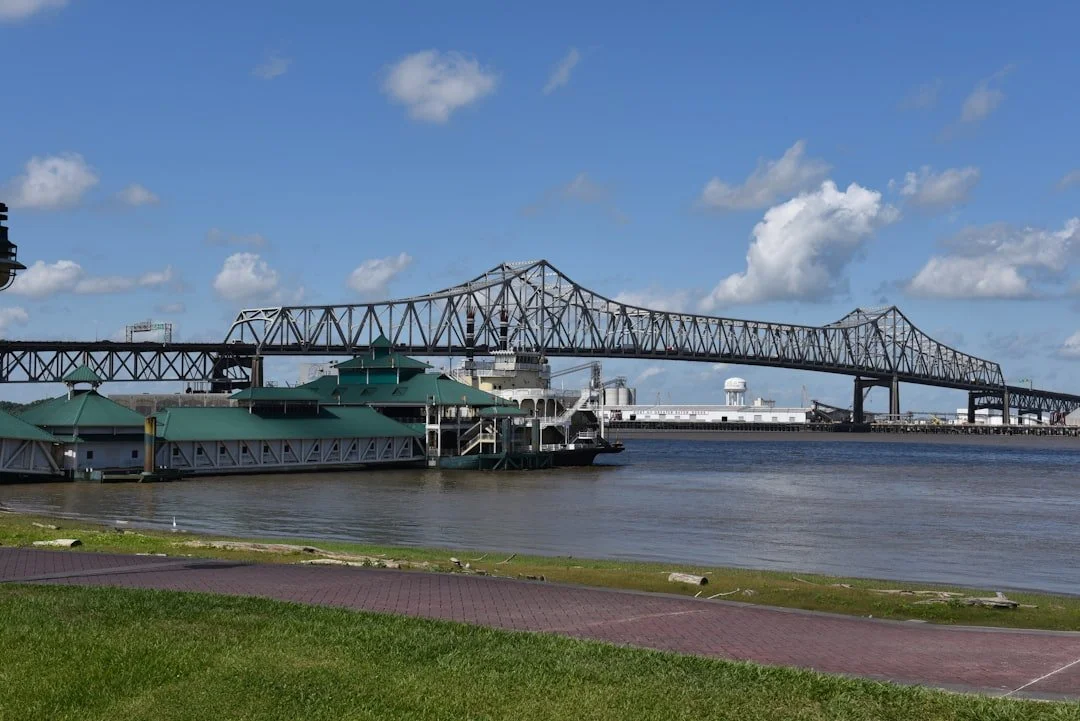
The Mississippi does not pass through Baton Rouge so much as it presses against it, heavy and deliberate. The levee rises like a barrier built from memory, holding back something that has already shaped the land beneath it.
Horror writing in Baton Rouge, Louisiana begins with what is buried rather than what is seen. The city carries layered histories of conflict and those layers never fully settle. What you build here as a writer tends to surface slowly.
Where the River Holds Its Breath

Why Baton Rouge Works for Horror Writing
Baton Rouge carries tension in its complex geography. It is an area where the river threatens and the land sinks. The past refuses to stay abstract, because it is still visible in buildings, roads, and within the soil that has been fought over for centuries.
That tension creates a foundation that supports multiple kinds of unease.
Environmental horror, driven by water and humidity
Historical horror, where past violence and occupation leave lingering consequences
Slow-burn dread, built through atmosphere that feels heavy long before anything happens

Horror Locations in Baton Rouge That Inspire Stories
Certain places in Baton Rouge feel less like landmarks and more like points of pressure.
Old Louisiana State Capitol
A Gothic Revival building from the 1800s perched above the river. Its castle-like design and history of destruction and rebuilding suggest a place that refuses to stay finished.
LSU Indian Mounds
Ancient burial mounds on campus grounds, predating the university by centuries. Reports of drums and shadowy figures create a sense of something older than the city itself.
Highland Road
A long stretch tied to Civil War movement and battle aftermath. Sightings of wandering soldiers suggest time folding in on itself along the roadside.
Pleasant Hall Plantation
A 19th-century plantation house once surrounded by working land and enslaved labor. Its preserved interiors and reported apparitions suggest lives that never fully left the property.
Magnolia Mound Plantation
An 18th-century Creole plantation with documented ties to slavery. Accounts of apparitions and lingering sounds tie the land directly to its history.
Hilton Baton Rouge Capitol Center
Once a political hotel with hidden tunnels, later repurposed over time. Reports of footsteps and figures suggest something never fully checked out.

Strange Baton Rouge Patterns Beneath the Surface
Many Baton Rouge stories circle around land that remembers more than the people living on it.
The Castle That Burned and Returned
The Old State Capitol was built, burned during the Civil War, then rebuilt again on the same ground. Some accounts describe a young girl, Sarah Morgan, still tied to the site, as if the rebuilding never replaced what was lost.
The Drums That Do Not Stop
The LSU mounds are among the oldest structures in the region, built by Indigenous peoples long before the city existed. Students have described hearing drums at night, a rhythm that does not belong to the present.
The Soldiers Who Never Left
After the Battle of Baton Rouge in 1862, sightings of Confederate soldiers along Highland Road became part of local accounts. They appear disoriented, as though still moving through a fight that never resolved.
The River That Keeps Its Dead
Stories persist of a sunken vessel and passengers lost in violent water, their presence tied to the river’s edge. Witnesses describe sounds and figures near the banks, especially after storms.
Writing Horror Set in Baton Rouge
Stories here tend to unfold under pressure rather than through sudden disruption. The environment shapes behavior first, and fear follows after.
Weight of the unseen past
Characters rarely begin with a clean slate, as the setting quietly imposes history onto their decisionsWater as constant presence
The river and humidity influence pacing, making tension feel slow, creeping, and difficult to escapeArchitecture that resists time
Buildings carry visible age and reconstruction, which can mirror fractured narratives or unstable realitiesMovement constrained by landscape
Levees, roads, and swamp edges create natural limits that narrow choices without needing explicit barriers
When writing Baton Rouge horror, tie both the past and the present together, because that not only shapes the story, but also the land.
Baton Rouge Horror Writing Prompts

FAQ: Horror Writing in Baton Rouge
-
The proximity of the Mississippi River and the levee system creates a constant sense of pressure that shapes both setting and pacing.
-
Not necessarily, but the environment naturally suggests past events, so even modern stories often feel influenced by them.
-
Both work, though urban spaces often feel layered with older structures and hidden histories beneath them.
-
Heat and humidity slow movement and perception, which can stretch tension and delay resolution in subtle ways.
-
It supports both, but grounded horror tends to feel more immediate because the environment already carries unease.
-
The presence of the river and the heaviness of the air, since both influence how characters think, move, and react.