

Writing a Horror Novel in Chicago, Illinois
The Windy City Howls Louder at Night
Chicago does not need darkness to feel watched. The city carries its unease in every space without softening them. Its beauty has edges: limestone, iron, winter glass, alleys still narrow enough to make footsteps sound like pursuit.
A horror story set in Chicago can move from a polished lobby to a service corridor, from a museum room to an underpass, and still feel as if it has not left the same long, breathing organism.
Beneath the Lake Wind and Steel
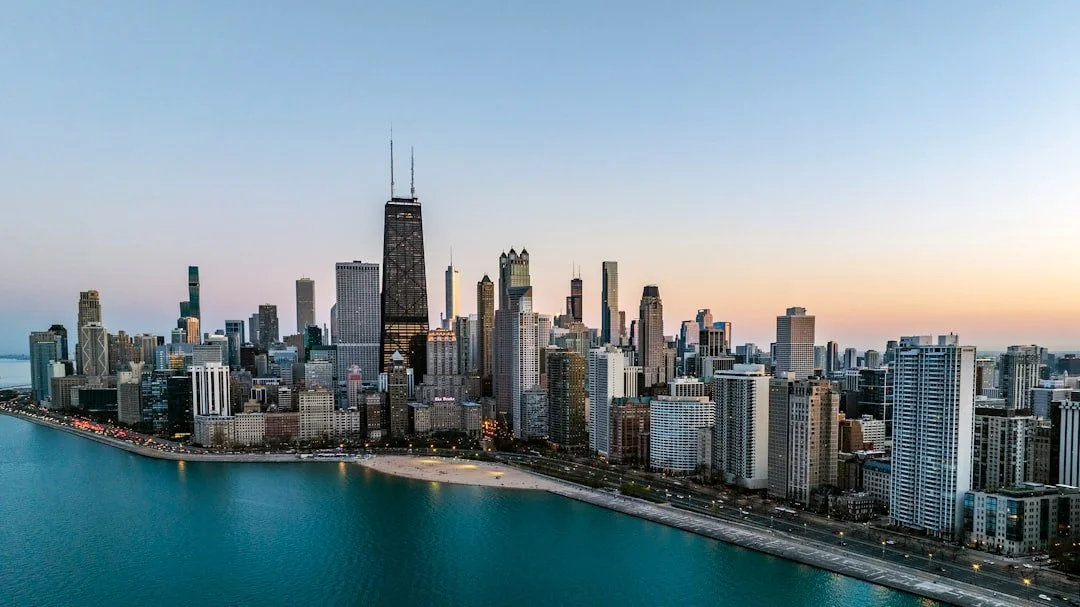

Why Chicago Works for Horror Writing
Chicago’s strongest horror quality is compression. The city presses grandeur and neglect into the same frame, often within a few blocks. Its vertical architecture makes power feel visible, while its tunnels, alleys, basements, and transit routes suggest another city operating underneath the public one.
The city lends itself to stories shaped by systems rather than single monsters.
• Urban horror, rooted in buildings that seem orderly until their hidden routes begin to matter
• Historical horror, drawn from disasters, reform movements, and the violence left behind by progress
• Psychological horror, shaped by crowds that make a character feel exposed instead of safe

Horror Locations in Chicago That Inspire Stories
Chicago has a strong contrast between civic grandeur and hidden infrastructure, which makes horror feel both public and buried.
Jane Addams Hull-House Museum
Hull-House began as a settlement house in 1889. Its Devil Baby legend turns social memory into attic folklore, ideal for horror about denied suffering.
Chicago Pedway
The Pedway links downtown buildings through tunnels and corridors begun in 1951. Its partial maps suit stories about vanishing beneath business hours.
Graceland Cemetery
Graceland opened in 1860 and holds many of Chicago’s prominent dead. Its monuments make grief feel civic, permanent, and strangely curated.
Couch Place Alley
Behind the former Iroquois Theatre site, Couch Place recalls the 1903 fire that killed more than 600 people. Horror here begins with blocked exits.
Chicago Water Tower
The Water Tower survived the 1871 Great Chicago Fire. Its pale limestone presence can frame a story about what remains after everything else burns.
The Many Chicago Rumors That Refuse Burial.
Chicago’s legends often attach themselves to thresholds: roads, attics, alleys, cemeteries, and rooms people insist are empty.
The Devil Baby of Hull-House
In 1913, women came to Hull-House demanding to see a child rumored to have horns, cloven hooves, pointed ears, and a tail. Jane Addams denied that such a baby existed, but the story kept spreading through immigrant communities, changing shape with each retelling. Some versions blamed a cruel husband, others a blasphemous father. The attic became the center of the rumor because it gave the unseen child somewhere to be hidden.Resurrection Mary
Resurrection Mary is usually described as a young blonde woman in a white party dress who appears near Archer Avenue after a night of dancing. Drivers who give her a ride are said to lose her near Resurrection Cemetery in Justice, southwest of Chicago. Researchers have tried to identify the real Mary, but no confirmed identity has settled the story. The uncertainty keeps her moving.Bachelor’s Grove Cemetery
Bachelor’s Grove, southwest of the city, is tied to reports of lights, figures, and apparitions among damaged stones and wooded paths. The cemetery also has a history as a real burial ground connected to early settlement in the area. Its folklore persists partly because the place feels half-preserved and half-abandoned, as if the record has been left open.The Iroquois Theatre Fire
On December 30, 1903, a fire broke out during a matinee at the Iroquois Theatre on West Randolph Street. More than 600 people died, many trapped by confusing exits and failed safety measures. The theater was later replaced, but stories remain attached to the site and the alley behind it. The horror is not only the fire, but the claim that a beautiful public room had been built without enough thought for escape.
Writing Horror Set in Chicago
A windy city horror story changes once Chicago begins deciding how people move. For example:
Routes With Consequences
A wrong stairwell, delayed train, closed bridge, or locked side door can shift a scene from inconvenience into entrapment.Public Rooms, Private Fear
Hotel lobbies, museums, stations, and theaters allow terror to unfold in full view while no one understands what they are seeing.Weather as Pressure
Lake-effect cold, wind tunnels between buildings, and sudden storms can make rational choices feel physically harder.The City Underneath
Service corridors, freight elevators, lower streets, and pedestrian tunnels create a second Chicago beneath the one characters claim to know.
Remember, in Chicago the fear can always be waiting at the next platform.
Chicago Horror Writing Prompts
FAQ: Horror Writing in Chicago
-
Chicago has a strong contrast between civic grandeur and hidden infrastructure, which makes horror feel both public and buried.
-
Yes. Treat it as a place shaped by reform, women’s stories, immigration, and folklore rather than only as a haunted house.
-
Both can work, but Chicago is especially strong for stories that blur documented history with rumor.
-
Anchor scenes in movement: L platforms, alleys, lakefront wind, bridge crossings, downtown tunnels, and neighborhood boundaries.
-
Yes, but it will feel more urban than rural. Focus on community memory, immigrant legends, cemetery lore, and rituals hidden inside ordinary city life.
-
Late fall and winter are the most natural fits because darkness arrives early, wind changes the body’s behavior, and empty streets feel less neutral.