

Start Your Horror Novel in San Antonio, Texas
The Ghosts Remember the Alamo Too
San Antonio does not hide its dead history behind glass. It leaves it in plazas, mission walls, cathedral stone, hotel corridors, river paths, and neighborhood roads that still carry older names underneath the new ones.
For horror writing in San Antonio, Texas, the city offers a rare mix of sacred architecture, battlefield memory, borderland folklore, and ordinary places that feel watched long after dark. The past is not background here. It behaves like a witness.
A City Built Over Its Own Echo

Why San Antonio Works for Horror Writing
San Antonio’s strongest horror quality is continuity. The city keeps functioning around sites of violence, devotion, migration, tourism, and legend, which allows a story to place dread inside places people still use every day.
That gives writers room to build:
Historical horror, rooted in siege, conquest, and public remembrance
Religious horror, shaped by missions, cathedrals, relics, and ritual space
Folkloric horror, carried through roadside warnings and family-told legends

Horror Locations in San Antonio That Inspire Stories
San Antonio’s unease often begins in places still polished for visitors.
The Alamo
An 18th-century mission and battle site in Alamo Plaza. Its chapel remains the city’s most recognized structure, useful for horror about public memory turning hostile.
Menger Hotel
Opened in 1859 beside Alamo Plaza, the Menger has hosted generations of guests. Its preserved interiors suit hauntings tied to reputation and unfinished business.
San Fernando Cathedral
Founded in 1731, San Fernando is Texas’s oldest continuously functioning religious community. Its plaza presence lends itself to sacred horror with civic stakes.
San Antonio Missions National Historical Park
The park preserves four Spanish colonial missions and is part of Texas’s only UNESCO World Heritage Site. Its grounds support stories about faith and control.
The River Walk
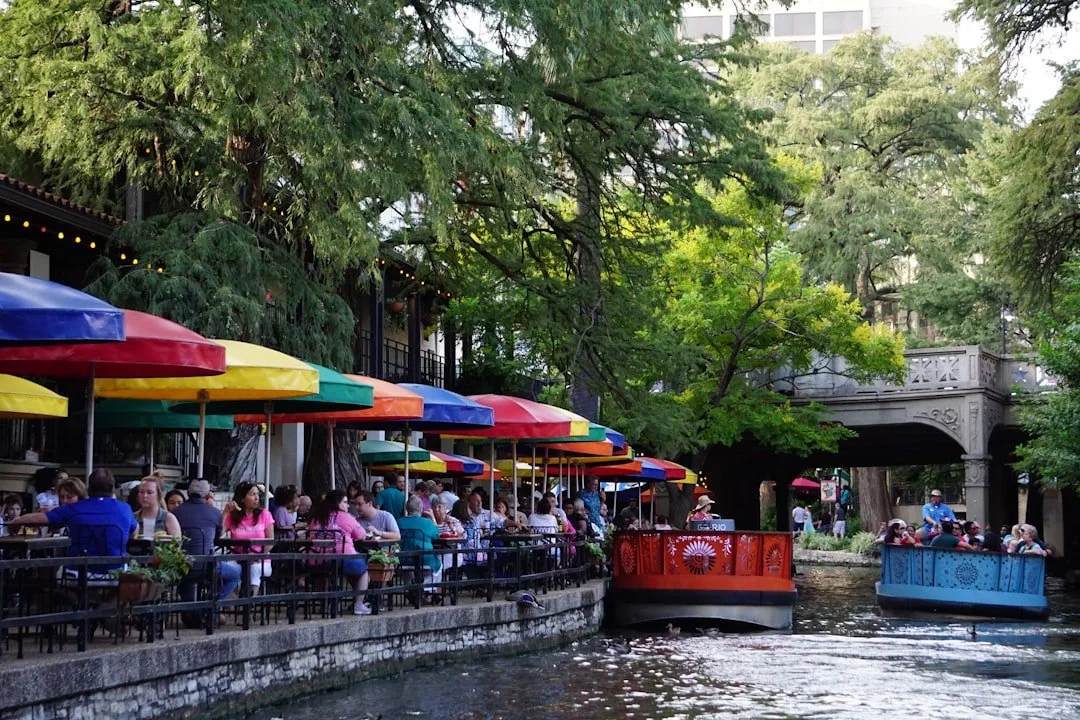
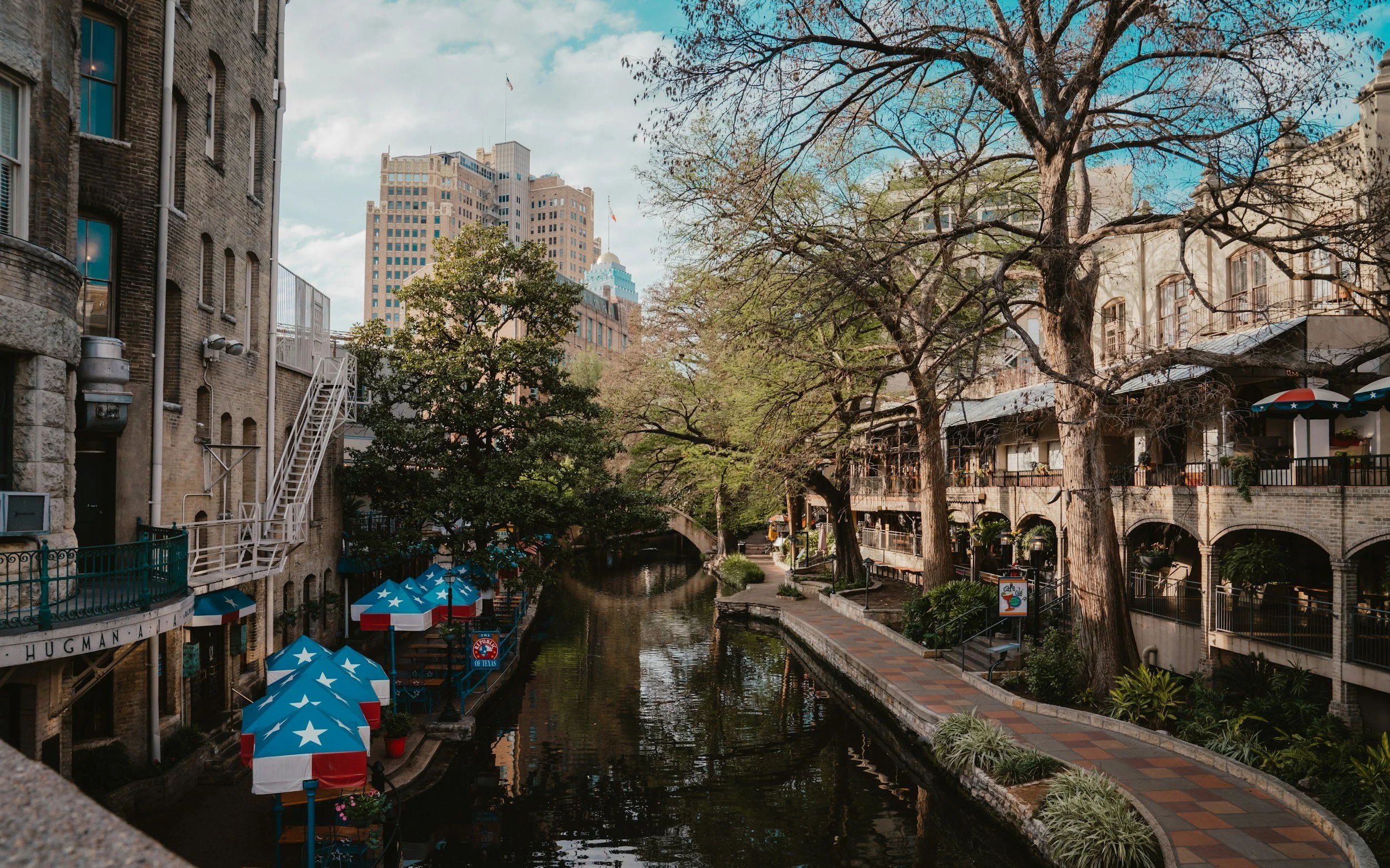
Designed from Robert H. H. Hugman’s river-level vision, the River Walk manages downtown water through paths and bridges. It suits disappearances below street life.
San Antonio Tales Told Beside the Road After Dark
San Antonio’s legends often attach terror to movement, especially roads, bridges, tracks, and crossings that seem ordinary until someone stops there.
The Ghost Tracks
One of San Antonio’s best-known urban legends claims children killed in a school bus accident push stalled cars away from danger near the railroad tracks. The story often includes powder on the bumper or trunk, supposedly revealing small handprints after the car moves.The Donkey Lady
The Donkey Lady legend centers on a disfigured woman said to haunt a South Side bridge after a terrible fire. In many versions, she attacks cars, screams from the brush, or appears as something partly human and partly animal.The Dancing Devil
A local nightclub legend tells of a strange man who danced with a woman before revealing hooved feet. He vanished after panic spread, leaving behind the smell of sulfur and a story that still belongs to San Antonio nightlife folklore.
Writing Horror Set in San Antonio
San Antonio changes horror by making the past feel public, not hidden, so characters often confront dread in places surrounded by witnesses.
Ceremony After Violence
A character may enter a preserved historic place expecting reverence and instead feel accused by what has been cleaned, labeled, and repeated.Water Below the City
River-level scenes can separate a character from the street above, turning music, footsteps, and laughter into proof that help is nearby but unreachable.Faith With Civic Weight
Religious sites in San Antonio do not feel isolated from city life, which gives sacred horror a public consequence rather than a private crisis.Folklore on Familiar Roads
Local legends work best when treated as household knowledge, the kind of warning someone laughs at until the car slows down by itself.
In San Antonio, horror does not need to invent a secret history. It only has to notice how much of the city already asks to be remembered.
San Antonio Horror Writing Prompts

FAQ: Horror Writing in San Antonio
-
Historical, religious, folkloric, and urban haunting stories fit naturally because the city blends public memory with active daily life..
-
Yes, but handle it carefully. Treat it as a real historic site, not just a spooky backdrop.
-
Ghost stories feel more organic, but monster fiction can work if the creature grows from folklore, water, roads, or mission history.
-
Write from texture: heat on stone, river-level shadows, old walls beside traffic, and locals who know which stories not to joke about.
-
Yes. Focus on atmosphere, power, silence, and history rather than mocking belief or reducing sacred places to props.
-
Its horror feels layered through Spanish colonial history, Tejano culture, battlefield memory, Catholic architecture, and legends still told like warnings.