

Conjure Chilling Tales in Boston, Massachusetts
Where Revolutionary Ghosts Still Haunt the Streets
Boston keeps its past close to the surface. Brick alleys narrow without warning, burial grounds sit beside office towers, and the harbor carries a cold, metallic smell that makes even daylight feel provisional. The city seems to keep earlier versions of itself on constant rotation.
For horror writing in Boston, the uncanny rises from compression: old bones under new pavement, public history beside private dread, and streets that remember more conflict than they can calmly display.
The City Beneath the Footsteps
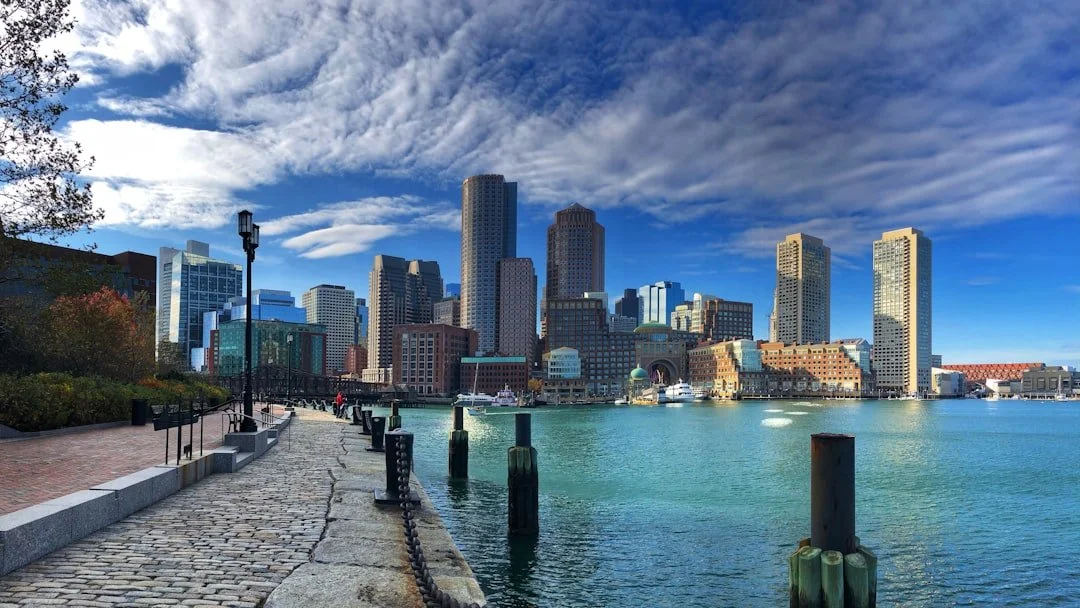

Why Boston Works for Horror Writing
Boston’s strongest horror quality is density. Its history is not distant or decorative. It crowds the present, forcing characters to move through spaces already shaped by punishment, revolution, disease, grief, and civic pride.
That gives writers several useful angles for building dread.
Historical horror, rooted in civic memory, preserved architecture, and unresolved violence
Psychological horror, shaped by guilt, inheritance, and the fear of being watched by the past
Environmental horror, driven by harbor weather

Horror Locations in Boston That Inspire Stories
Boston is marked by old spaces that collectively speak to the presevation of the haunted past.
Granary Burying Ground
Founded in 1660, Granary Burying Ground holds figures tied to the Revolution. Its crowded stones can turn public memory into something accusatory.
Copp’s Hill Burying Ground
Boston’s largest colonial burial ground dates to 1659. Its North End hill gives death a vantage point over homes, harbor routes, and anyone passing below.
Boston Public Library (Copley Square)
Opened in 1895, the Boston Public Library’s Bates Hall stretches with long tables and green lamps. Its silence can feel imposed rather than chosen, as if something is listening between the stacks.
Omni Parker House
The hotel preserves Charles Dickens’s former door and mirror, though his original rooms are gone. A reflection there can feel less like glass than residue.
North End Molasses Flood Site
In 1919, 2.3 million gallons of molasses surged through the North End, killing 21 people. Horror here can begin with sweetness turning lethal.

Boston Legends That Offer Terror With Tea
Boston’s legends often attach themselves to thresholds where documented history leaves emotional remains.
The Lady in Black
At Fort Warren on Georges Island, the Lady in Black is said to be the wife of a Confederate prisoner who tried to help him escape during the Civil War. The story claims she was captured, condemned, and later seen moving along the fort’s walls in dark clothing.
The Parker House Apparitions
The Omni Parker House has long carried stories of unexplained activity, including reports tied to certain rooms and the presence of past guests. Its association with Charles Dickens adds a literary unease, especially around the preserved mirror and door connected to his stay.
The Molasses Scent
After the Great Molasses Flood, stories persisted that the North End smelled faintly sweet on hot days for decades. The detail turns a disaster into a sensory haunting, one that arrives through heat rather than apparition.
Writing Horror Set in Boston
For Boston horror writing, the goal is to focus on unique enviornments.
Old City Claustrophobia: Narrow streets and layered neighborhoods can make escape feel possible on a map but difficult in the body.
Public History, Private Fear: A character surrounded by monuments may feel more isolated because everyone else agrees on the official story.
Weather as Interrogation: Fog, cold rain, and early winter dark can press characters into choices they might avoid elsewhere.
Institutions With Memory: Libraries, hotels, churches, and courthouses can carry authority while quietly hiding what they refused to record.
As you can see, there are many spaces and atmospheric elements that make the city stand out.
Boston Horror Writing Prompts

FAQ: Horror Writing in Boston
-
Its age is concentrated. Burial grounds, hotels, civic buildings, and modern streets often sit within steps of each other.
-
Yes. Industrial disaster, academic pressure, old wealth, medical history, and harbor isolation all offer darker angles.
-
Yes. Its density, older streets, and waterfront proximity can create tension without retelling the disaster.
-
Archivists, students, hotel workers, lawyers, nurses, historians, and lifelong residents all fit the city’s institutional weight.
-
It can, but fictionalized versions give more freedom when inventing deaths, hauntings, or hidden histories.
-
Cold brick, harbor air, worn stone, and the contrast between ordinary foot traffic and buried history.