
Why War and Global Conflict Fuel Horror Movies
To say that we are living in unstable times likely feels like an understatement. According to the International Committee of the Red Cross, as of 2026, there are an estimated 130 active armed conflicts globally. For reference, that is the highest number since World War II. It is no wonder that horror movies have become increasingly more popular.
There is a definite shift in the air, which has created a consistent sense of dread that, in my opinion, is one of the reasons why horror films are so cathartic. Horror films have always functioned as a cultural mirror. Movies reflect what people are already afraid of, then distort those fears just enough to make them visible.
When the world is stable, I have noticed a greater emphasis on fantastical horror. However, during periods of crisis, horror becomes more grounded, sharper, and often more unsettling because it focuses on realism.
In essence, horror adapts to fear, and when global tensions rise, the genre evolves to match the emotional reality of its audience.
War as a Catalyst for Horror Cinema
When a society experiences a large-scale conflict, it is understandable that people’s sense of safety and calm begins to erode. Institutions fail, authority becomes questionable, and the line between right and wrong becomes less clear. Horror films absorb these shifts and reflect them through tone, structure, and character behavior.
For example, after World War II, horror films leaned into paranoia and internal tension. Cat People (1942) was a psychological escape, but it was also a commentary on the “unseen enemy”, akin to the xenophobia present in the day.
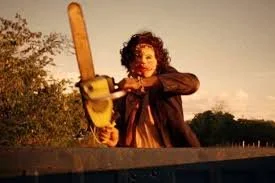
Similarly, following the Vietnam War, horror became far more chaotic and grounded. The Texas Chainsaw Massacre (1974), for example, does not include supernatural elements, but instead the horror comes from the idea of American social decay; the underbelly of the United States is ugly, grotesque, and extremely gory. The film’s director, Toby Hooper, has even said in a 2008 interview that the film was in response to being “lied to by the government about things that were going on all over the world".
The central themes of horror cinema are guided by societal happenings, and in particular, war shifts horror in two key wars:
Horror removes the illusion of control.
Horror introduces psychological instability as a core fear.
Instead of concerning itself with what could happen, which is a mark of the more fantastical horror, realistic horror that is born out of war tends to focus on what has already been broken.
Post-War Horror and the Fear of the Unknown
Horror is not just impacted by war and global conflict in the moment, but also what comes after. In the post-war space, there are existential threats and the fear of the unknown. I’m going to date myself a little here, but I remember personally how September 11, 2001, impacted horror films. I was in my high school criminal justice class when the first plane hit, and an announcement was made about it over the intercom. My teacher looked at us, her confused students, and, in complete shock, simply said, “Ya’ll, do you know how scary that is?”
At the time, I didn’t know the “scary” thing she was referring to was how much everything was going to change. 1990s horror was filled with meta-irony and had more supernatural elements, not to mention horror comedies.
After 9/11, we instead saw the rise of more visceral, darker films, such as Saw (2004) or Hostel (2005). It is also no surprise that there were also remakes of 1970s horror films such as The Texas Chainsaw Massacre (2003) and The Hills Have Eyes (2006). As we can see, horror films either recreate the familiar, which carries the same gritty themes, or it moves from physical confrontation toward existential fear. The enemy is no longer just outside. It can exist within systems, communities, or even the self.
How Crisis Impacts Horror Subgenres
It is no surprise that different types of global stress will shape the direction of horror. For example, when a disease becomes a primary fear, such as the recent COVID-19 pandemic, we tend to see more pandemic or biological horror, including zombies. When society feels unstable, apocalyptic and survival horror become more prominent. When systems fail, horror shifts toward isolation and self-reliance.
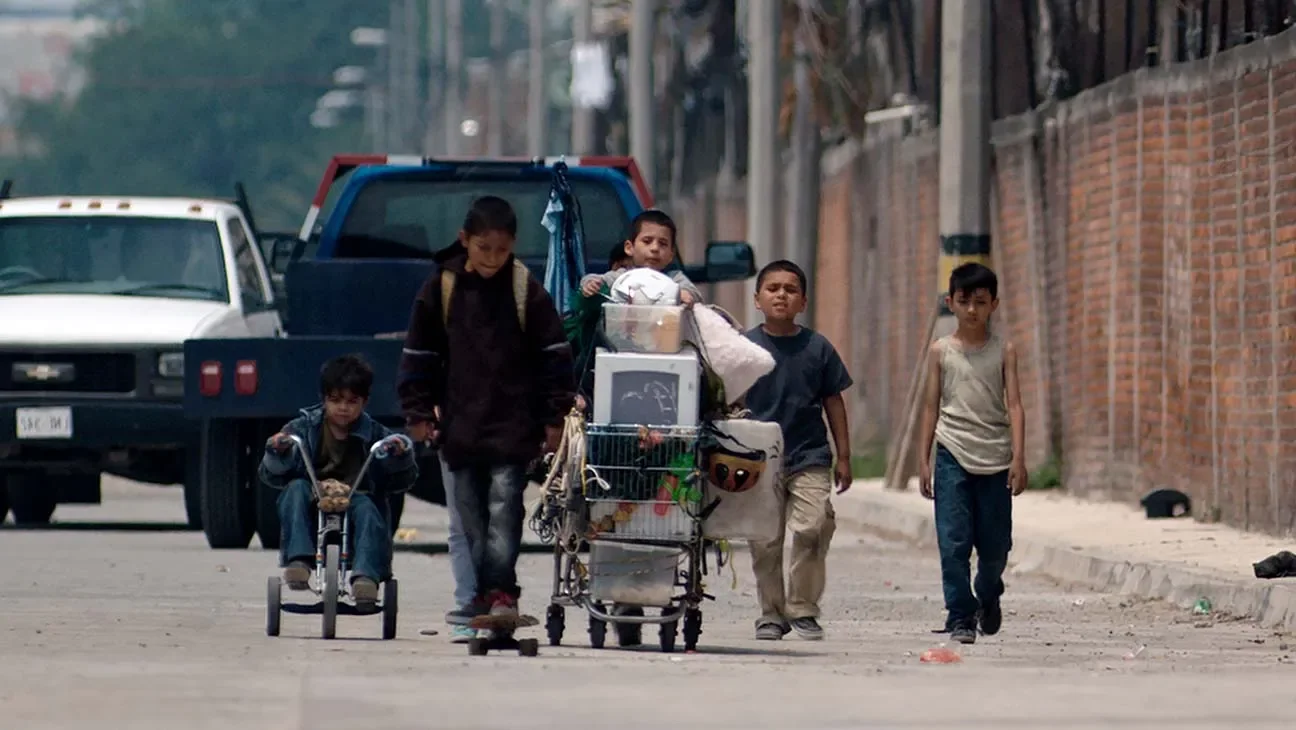
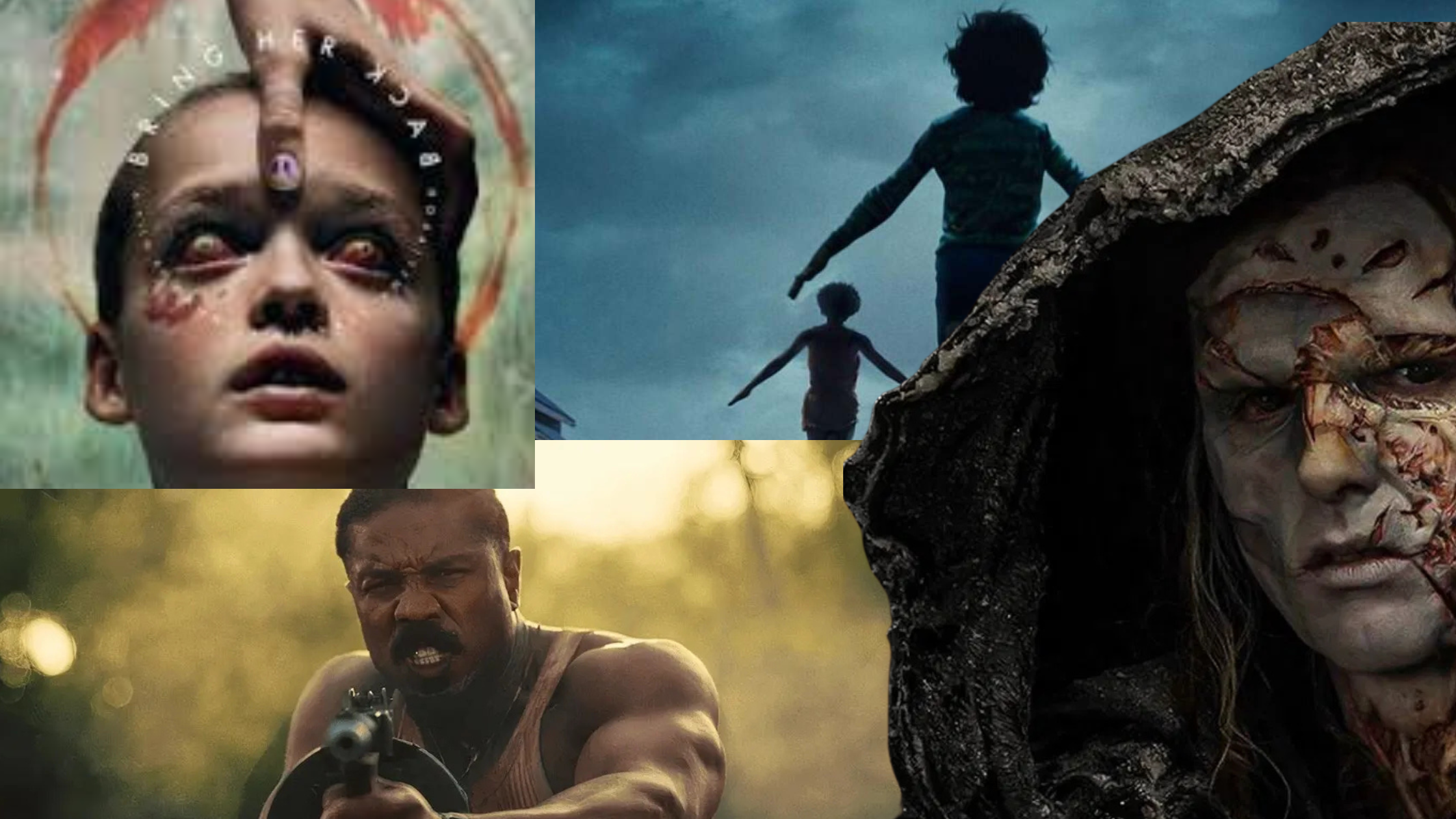
A film I believe emulates this well is Tigers Are Not Afraid (2017) directed by Issa López, in which we follow a young girl named Estrella, whose mom is missing, likely taken or killed by cartels. She joins a small group of street children, boys who have equally sad backstories. In this film, supernatural elements carry the backbone of the piece, which is not only a cultural choice, but also because it greatly underlines the way the children navigate loss and instability. The film frames the brutal realism of the cartel violence, with the fantastical wishes of children. Thus, the supernatural elements, including ghosts and symbolic imagery, are not separate from the narrative but are extensions of trauma.
The characters, reality, and imagination merge because both are necessary for survival. This blending is a defining feature of crisis-driven horror. The genre adapts not just to external events, but to how those events are experienced internally.
Modern Horror Films Shaped by Global Events
Recent films continue to showcase and reflect the global instability we see. Rather than relying on large-scale spectacle, they focus on tension that feels immediate, personal, and one that is deeply tied to identity and control.
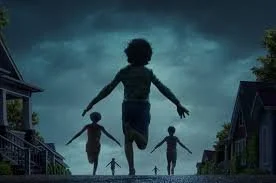
For example, Sinners (2025) leans into themes of morality, guilt, and internal conflict. Rather than presenting evil as something external, the film suggests that horror can emerge from within individuals and communities. That is to say nothing of the social, political, and even racial divisions that have become increasingly commonplace. Despite being set in an entirely different era, we see echoes of the divide that is happening now.
On the opposite end of the spectrum is a film like Weapons (2025), where multiple characters are tied together through a shared and unsettling event. This kind of narrative reflects a modern anxiety. People are no longer just afraid of isolated incidents, but of the potential for something to go wrong anywhere. There is also a growing fear that everything is connected in ways that are difficult to understand or control. The horror builds not just from what happens, but from how each perspective reveals a different version of the truth.
Interestingly enough, there are supernatural elements present in both films, and in many popular modern horror films. In my opinion, I believe it is because modern fear is abstract, not only physical.
Our current fears include:
misinformation
loss of identity
invisible systems of control
psychological instability
Thus, the enemy is no longer clear, but is an ambiguous force that permeates everything. I am sure I am not alone in waking up and just feeling something is “off.” Thus, I believe that we will continue to see this blending of realism and the supernatural.
Why Crisis-Driven Horror Resonates with Audiences
Out of every genre, horror is one of the most realistic. Not in a literal sense, after all, even the most realistic horror is often grounded in the supernatural, paranormal, or merely the extreme. However, horror is realistic because no one is safe. People are hurt, damaged, and often they die.
In real life, fear is often unpredictable and unresolved. Things are messy and not always wrapped up in a nice, neat bow, especially in terms of societal collapse or crisis. Thus, it is no surprise that war often drives horror. Horror creates distance without removing meaning. It allows people to engage with fear without being consumed by it.
In uncertain times, such as the current state of the world, that balance becomes even more important, and horror can even be considered a necessity to keeping one’s sanity.
DIVE DEEPER INTO CINEMA WITH MORE FILM ARTICLES

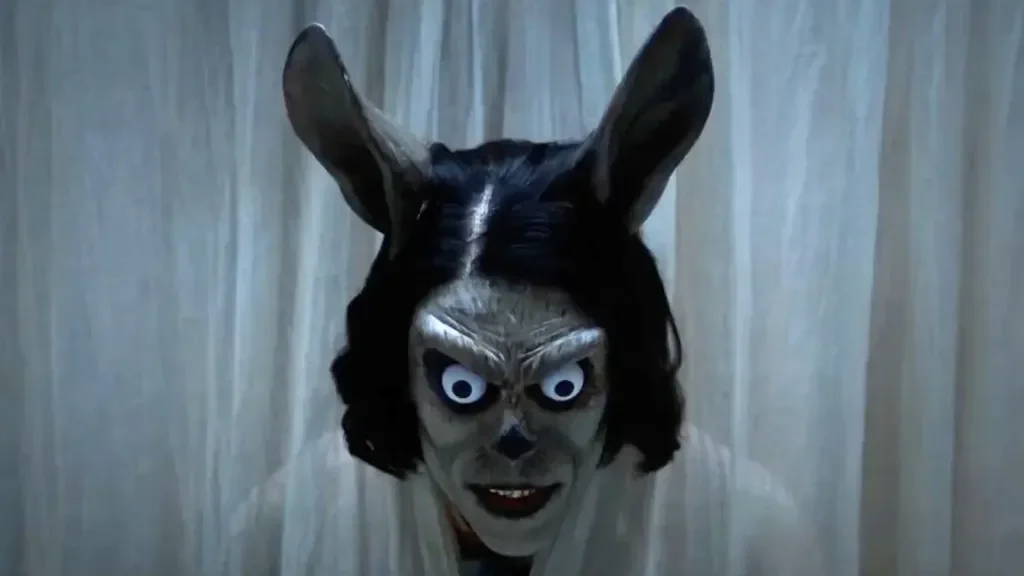







Explore how Buddy (2026) turns children’s TV into a nightmare about forced happiness, abusive control, repressed trauma, and unreliable authority.