
Inside This Obsession (2026) Analysis
- Why Obsession is not a teen slasher or simple crush-gone-wrong horror film
- How the One Wish Willow site and Nikki text line make the marketing part of the horror
- How Curry Barker and Taylor Clemens use direction, pacing, and cinematography to create emotional suffocation
- Why Nikki’s corruption is the film’s most disturbing expression of forced intimacy and identity loss
- How Bear’s toxic loneliness turns desire into control, making Obsession feel like psychological horror for a new generation
The first sign that Obsession was not the teenage slasher or crush-gone-wrong horror film I had expected came before the movie even started. A Drafthouse Recommends interview with the director and stars kicked off the teasers in the film showing I attended. In that segment, Curry Barker named The Coffee Table, the 2022 Spanish black-comedy-horror film directed by Caye Casas, as a reference point of inspiration. If you have seen that film, you know its tone is extremely psychologically bleak. If you haven’t seen it, just know that the comparison immediately made it clear to me that Barker was more interested in emotional discomfort than in easy scares.
Then came Alamo Drafthouse’s no-talking spot (they are little reminders to the audience not to talk and text, which is ironic because you order food with your phone). Indie Navarrette, who plays Nikki, did the whole don’t talk spiel and then, without missing a beat, screamed bloody murder at the audience. What could have been a playful bit of theater etiquette turned into the initial jump scare, which gave insight into what was to come.
By then, I knew Obsession was going to be something different, and that is exactly what the film delivers. It is psychological horror built from unrequited love, extreme performance, and suffocating visual control, turning longing into something deeply invasive.
Obsession is not a love story, and it is certainly not a teen slasher. It is horror wearing the skin of desire, where getting what we thought we wanted becomes the most terrifying outcome.
The Marketing Campaign Was Part of the Horror of Obsession
Before I dive into what makes Obsession a phenomenally unique horror film, I have to commend the marketing department, or whatever agency handled promotion. The marketing does well to blur the line between viewer and participant through:
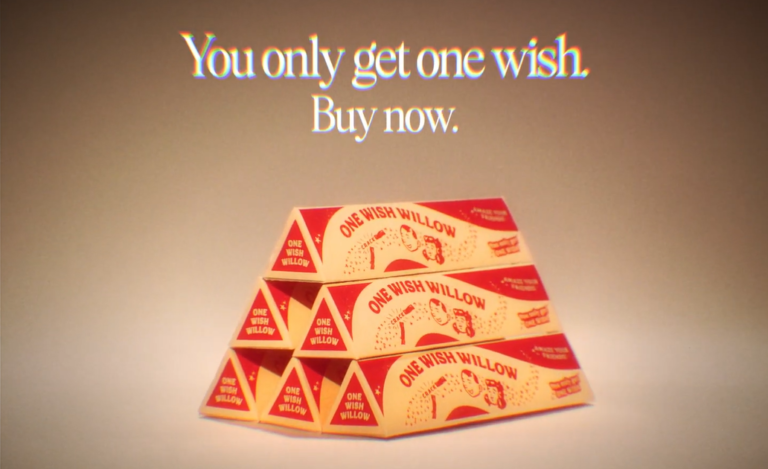
The One Wish Willow Experience
There is a working website for the one wish willow, the reality-bending trinket that causes the wish in the first place. The site promises that the one wish willow is “single use only” and “grants one wish.” There is a quick how it works section, influencer videos, a FAQ, and of course, a section listing the item for sale. You can’t actually buy one since it’s perpetually sold out.
You Can Actually Text Nikki
While the website is fun, what is even better is that you can text Nikki at (724) 876-4554. Upon signing up, you get a controlled version of the uncomfortable closeness shown in the film.
Take a look at some of the texts I received:
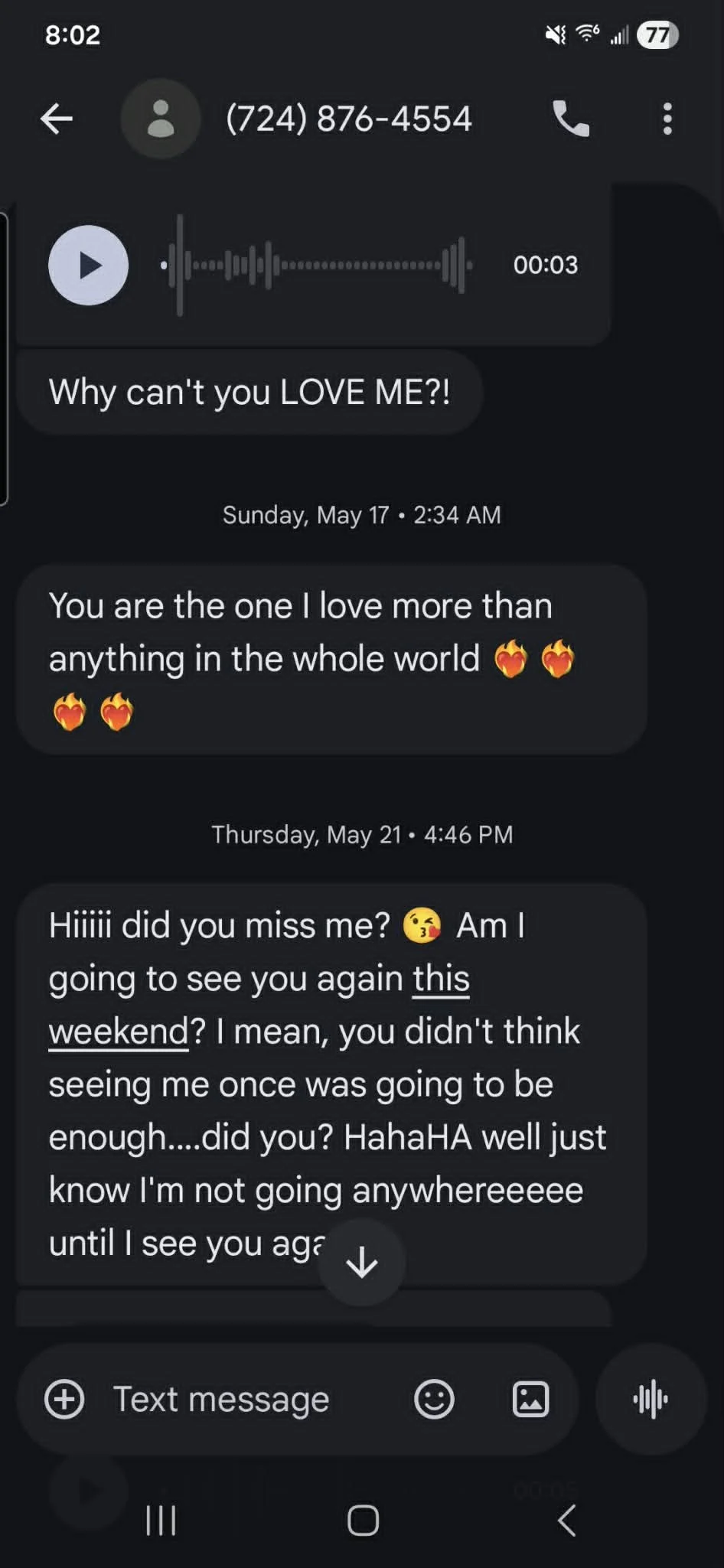
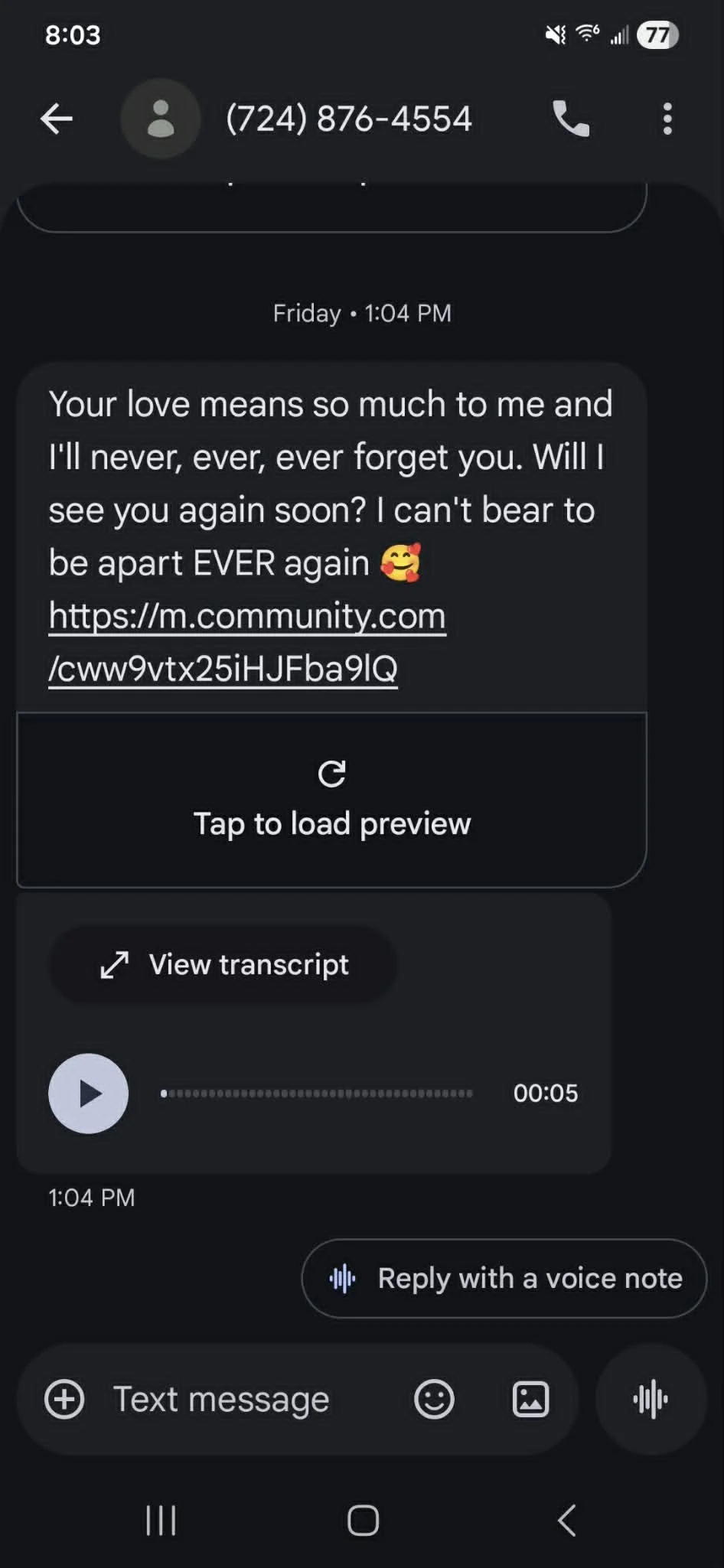
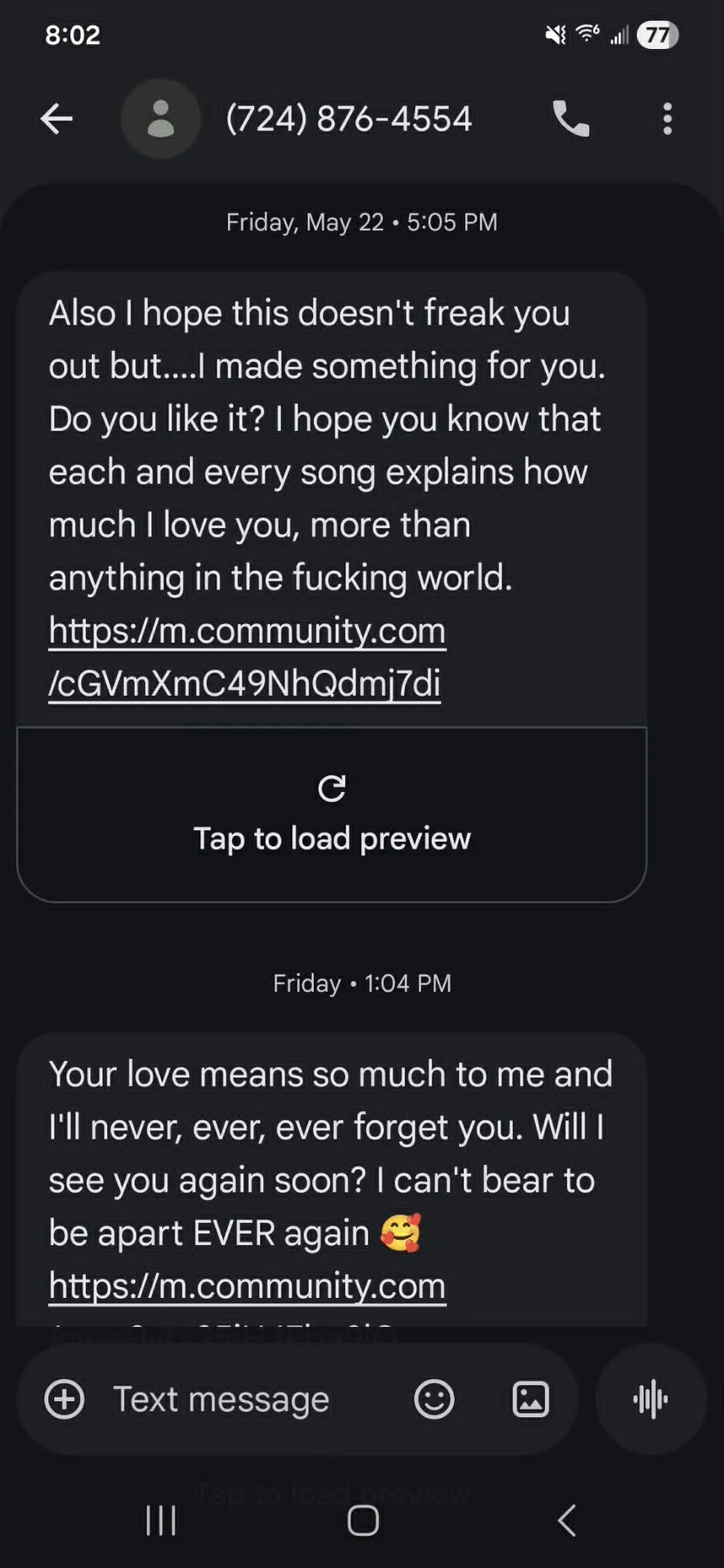
Completely unhinged right? The added voice clips elevate the text messages and gives the whole campaign and air of freaky (pun intended) realism. Take a listen to a few of them below:
It was also spaced nicely because I I kept forgetting I signed up for the SMS, and then I’d get another unhinged text from the character. I especially like that there was a customized Spotify playlist. While I signed up after I saw the movie, I wonder how my perspective would have been shaped had I signed up before.
Marketing as Psychological Manipulation
I love it when films create an immersive experience, like the website that was created for Danny and Michael Philippou’s Bring Her Back (2025). What truly makes the marketing work in this case is that all these promotional gimmicks aren’t just selling a movie; they are instead placing the audience in the emotional position the film is analyzing.
Why Obsession Feels Different from Other Horror Films
Obsession opens with the central composition of Bear, played by Michael Johnston, rehearsing what he plans to say to his crush, Nikki. By keeping the frame focused on Bear, the film initially lets the audience sit inside his nervous sincerity before revealing that he is practicing the confession with a waitress, coached by his friend, Ian, played by Cooper Tomlinson.
The beginning of the film feels awkward, casual, and almost romantic, framing everything in traditional romance tropes. That softer opening creates a sense of safety before the film starts to unravel. In fact, that same sense of familiarity is also showcased through many emotions which later become distorted:
Loneliness
Insecurity
Romantic longing
The desire to be chosen
If this were a romance, the opening would have set the stage for unrequited love that turns into a shared bond, which eventually turns into a declaration of love. But this is a horror, so the framing only makes the audience feel secure for sinister purposes. Further, the concept of the One Wish Willow is equally a plot mechanic that the audience can understand. What would you wish for? That answer emotionally hits in the same way as the question, “What would you do if you won the lottery?”
Barker uses all of this to lull the audience into a false sense of safety before he rips the rug out. Essentially, he makes the audience recognize the desire first, then realize the danger. Once they do, like with Bear, it is a little too late.
Curry Barker’s Unique Directorial Style
If you have seen any of Curry Barker’s short films, such as “The Chair” or “Milk and Serial,” which also features Cooper Tomlinson, then it is easy to get a sense that he uses emotional misdirection to build horror without the audience being aware of what groundwork is being laid out. This technique is likely aided through his experience with online sketch comedy because both horror and comedy rely on timing, tension, and subverting audience expectation. Obsession often uses the rhythm of awkward comedy before shifting into the horror.
As mentioned, Barker gives the audience time to get comfortable, and once they are, it becomes simply too late to turn back. I find it especially clear in the way that Bear’s character was written. He comes off as shy, unassuming, and awkward. There are subtle signs, however, that Bear sees love as something he can rehearse, manage, and eventually force into place. It is a great foundation and can even divide audiences into whether they are fully sympathetic to his character from the jump.
In a similar vein, Barker treats violence the same way. There are plenty of gory, violent moments, but they too are threaded out. Violence is treated as an emotional rupture rather than shock. Take, for example, (spoiler warning) Sarah's death. It is horrifying, of course, but it is also the moment when the emotional and supernatural consequences of Bear’s wish become impossible to rationalize.
Barker does well in crafting the escalation in a way that is subversive before it hits all at once. This is also seen through his cinematic choices..
Cinematography That Creates Emotional Suffocation
While the work of Curry Barker is certainly noteworthy, the cinematography of Taylor Clemens is equally worth exploring.
Before Obsession, Clemens was known for creating surf videos and skate videos. Upon receiving the job, Barker invited Clemens over to watch both Hereditary (2018) and Midsommar (2019). While the film does hit an Ari Aster tone, Obsession has it’s own mechanisms in place, especially when it comes to lighting, framing, and actor direction.
More specifically, the cinematography elevates the film through:
Darkness Even in Daylight
Even when a scene takes place during the day, the audience still does not feel safe. For instance, during the interior music store shots, characters are framed tightly, and there is an overuse of warm, yellow hues that are overtly contrasted and shadowed. It is no surprise that Clemons mentioned Sev7n (1995), directed by David Fincher, with the cinematography of Darius Khondji as inspiration. The use of lighting and shadow work makes ordinary daytime settings feel darker, tighter, and more emotionally constrained than they should.
The Wish Changes Framing
After the wish, the cinematography begins to feel more boxed-in and psychologically unsafe. In this regard, Barker and Clemens use Claustrophobia as a visual tool, allowing the composition to give viewers an ability to feel visually settled. Many scenes are shot on a locked tripod, with carefully framed images that force the audience to fill in the rest of the frame mentally. What you can imagine is far more terrifying than what is on screen, so when Nikki screams or suddenly appears, the jump scares pay off well because your mind is already on high alert.
Nikki’s Body Movement
Indie Navarrette does a phenomenally stellar job in this film, which I will dissect in the next section, but I do want to call attention to the blocking direction. Navarrette uses unnatural body movements, sudden shrieking, and staring from dark corners to underline the supernatural entity that is truly inhabiting Nikki's body. The camera allows movement, shadow, and partial visibility to do the heavy lifting so that when sound design kicks in, it not only amplifies the horror but reiterates that things are definitely not okay, especially for the body the entity possessed and the one who made it so.
The Gradual Corruption of Nikki
The mechanics of the wish are made that much more horrifying because of the way in which Nikki is corrupted by it. I have read several takes that say Nikki had feelings for Bear that he could have simply allowed to play out instead of using the wish, but I disagree. I find Nikki's possession that much more disturbing because she has no romantic feelings for him. In fact, before the wish, she sees him in a more familial way, almost like a brother. Additionally, during the party scene, she outright reads the story of Hansel and Gretel, which takes an incestuous turn. That realization makes the wish especially grotesque. It is not creating love where love was hidden, but is instead forcing romance onto a relationship where Nikki’s original emotional framework may have been non-romantic.
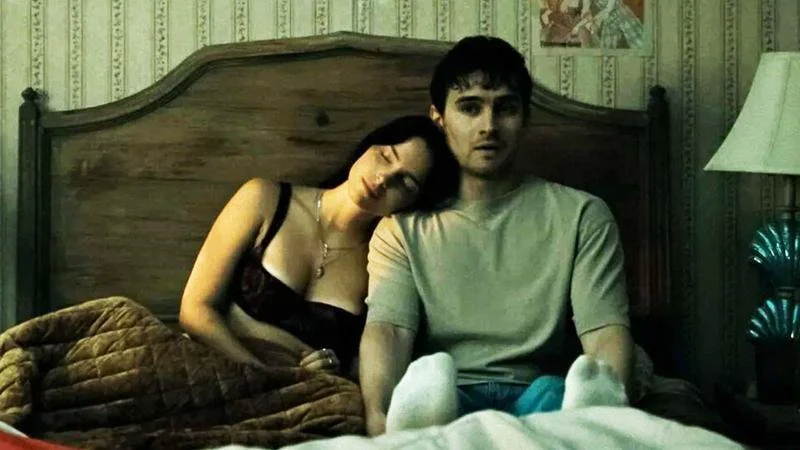
That is also where the supernatural entity itself becomes important. Ian’s wish is simple and literal: money can fall from the sky, even if it's a billion dollars, so the entity can fulfill it in a blunt, almost cartoonish way. Bear’s wish is different because “make Nikki love me” requires the entity to imitate a human emotion it does not understand. So the entity escalates. It gives Bear what a nonhuman or demonic intelligence might think love looks like: devotion without boundaries, constant proximity, sexual availability, emotional worship, and extreme, grotesque acts of care. A perfect example of this is the dead cat sandwich (sorry if you are squeamish). Nikki, or rather the entity inside her, is trying to fulfill a human need or comfort Bear, but its version of affection is horrifyingly literal and wrong.
This is why Nikki’s behavior feels less like a simple possession story and more like personhood being completely overlooked and then overwritten. One of the scenes that showcases this best is also one of the most shocking. While waiting for Bear to get home, she stands in the same spot for hours to the point where she urinates, defecates, and…yeah, it's a really hard-to-watch scene. It is also a truly haunting window into psychological and bodily collapse. I am not a psychologist, and I am in no way qualified to diagnose Nikki, but I did feel the film handled the undertones of psychosis remarkably well. What made it so impactful was that her behavior did not feel like exaggerated “movie insanity.” Psychosis can involve a loss of contact with reality, disorganized thinking, and behavior that appears bizarre or inappropriate to others. In severe cases, that disorganization can interfere with basic self-care, including hygiene, eating, and other bodily needs. In the logic of the entity, even Nikki’s biological needs still have to be “fulfilled,” but without human judgment, privacy, shame, or self-regulation.
That makes her transformation tragic as much as it is frightening. Inde Navarrette is not just playing someone “crazy”; she is playing someone whose body, emotions, and identity have been hijacked by a wish built around someone else’s fantasy. The horror is not only what Nikki does, but also that Nikki is trapped inside her own mind, with no possibly way of release unless she or Bear dies.
Male Loneliness And Modern Obsession
For quite some time, researchers have identified a male loneliness epidemic in which men in particular are becoming more emotionally detached because of social isolation. Obsession captures the insidious side of this with Bear's characterization and the slow reveal of his internal struggles. At first, he seems shy, insecure, and easy to pity, but the film keeps showing how quickly that insecurity turns into entitlement. Prior to the wish, Nikki gives him several signs she isn't interested romantically, and in fact, she redirects the conversation to their friend, Sarah, played by Megan Lawless, whose crush on Bear is “so obvious.”
That fantasy becomes even uglier once Sarah enters the picture more directly. Sarah outright tells Bear, “I really do like you,” and then reveals that (another spoiler) Nikki and Ian had been hooking up on and off for about two years. That detail matters because it means Bear is not simply missing subtle signs. He is surrounded by evidence that Nikki’s feelings are not what he wants them to be, and he still chooses the version of Nikki he has built in his head. Sarah represents mutual interest, but Bear does not want someone who wants him back. He wants the person he simply cannot have.
When the wish is in full force, everyone around him is concerned. Ian makes it a point to tell Bear that it looks like Nikki is going through something and that Bear is taking advantage of the situation. Despite being called out, Bear’s defense is that Nikki is “all over” him, which is exactly the problem. He treats her sudden intensity as proof that he is wanted, even when every other sign suggests she is no longer acting freely.
In fact, Bear’s most toxic line of thinking is not simply “I'm so lonely.” It is “What would be so bad about being with me?” That is the emotional core of the film’s exploration of toxic male loneliness. He cannot accept that Nikki’s refusal is enough, so his pain becomes more important than her autonomy, his fantasy becomes more important than her personhood, and by the end, Nikki is not just a woman he wanted to love him. She is the evidence of what happens when loneliness curdles into a get-what-I-want-at-all-costs mentality.
A Psychological Horror For the Next Generation
There is a reason Obsession has reportedly earned more than $170 million and counting. It is a psychological film that speaks directly to the horror of modern intimacy, which is often built around imagining a relationship that is not there, wanting access to another person without reciprocation, and confusing being seen with being loved.
That is what makes Curry Barker’s film feel so relevant. Obsession uses its marketing, cinematography, performances, and psychological realism to explore the same central fear from every angle: what happens when desire becomes control. In short, Obsession's success proves there is a real audience for horror that is emotionally specific, formally controlled, and willing to make viewers uncomfortable instead of simply trying to make them scream.
DIVE DEEPER INTO CINEMA WITH MORE FILM ARTICLES



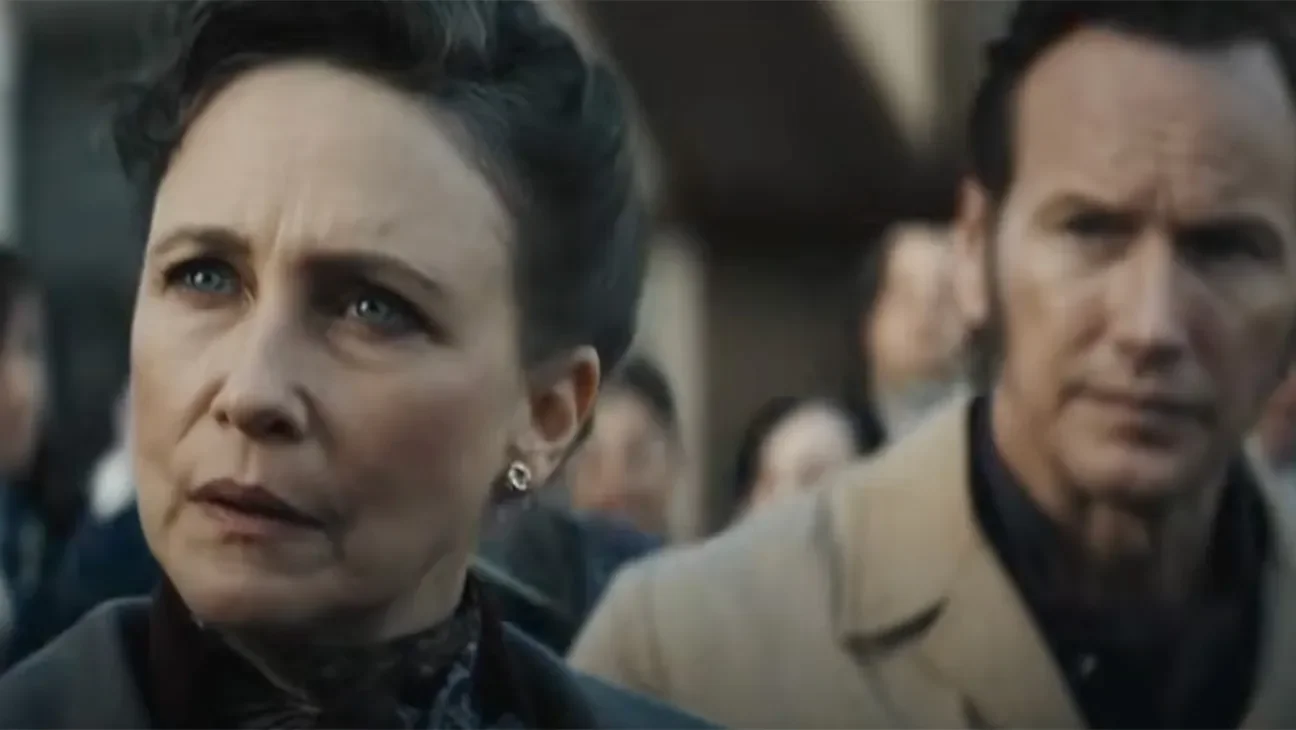






Explore how Buddy (2026) turns children’s TV into a nightmare about forced happiness, abusive control, repressed trauma, and unreliable authority.