
How To Write a Compelling Backstory For Your Horror Character
When writing a character, backstory is the most fundamental aspect of storytelling. After all, consider how you were shaped by your own life. What memories and milestones have made you into the person you are today? What moments still linger, half-buried, shaping you in ways you don’t fully understand?
Whether good or bad, all life experiences will shape our futures. Backstories provide your characters nuance, purpose, and resonance, improving the storytelling experience. In horror, they also act as the seed of dread, essentially the quiet origin of everything that will eventually go wrong.
If you want to provide your character with more depth and dimension, here is how to write a compelling backstory:
The Basics of Building Character Backstories

To create a multidimensional character with drive and a purpose in your novel, you need to understand what happened to them before the beginning of your book. For a writer who wants to develop interesting characters and have multiple facets, they need to grasp the fundamentals of backstory.
This begins with a simple question:
Where did they come from?
Yes, this question can be taken both literally and figuratively. Were they raised somewhere safe, or somewhere that still feels like it’s watching them?
As a writer, you must understand the essentials of their basics. Establish basic information first and then you can dive into your characters' ambitions, conflicts, and the nuances of their personality.
During this initial character backstory creation phase, keep the following steps in mind:
Establish The Basics: What is Their Name? What Do They Look Like? How Old are they? There is a wide range of questions you can ask your character to understand them better.
Define Their Relationships:What relationships did they have growing up? What relationships do they have now? Understand who surrounded them and why. It is also essential to consider how these characters view your character. When you look at character perspectives in this way, you have a better sense of the core traits of your character. In horror, ask one more question: who is no longer there, and why?
Dive Into Their Motivation: What are the reasons that led them up to this point? Horror characters often have different motivations for an inciting incident to occur, even if they are considered a villian. This can often change over time as well. Sometimes that motivation is survival. Sometimes it’s guilt. Sometimes it’s something they can’t quite name.
Determine Conflict:What is the main conflict of the story and how does it affect your character personally? Further, how does your character feel about this conflict? And what part of their past makes that conflict feel inevitable?
Once you square away these essential backstory elements, you can then refine your technique.
Building An Effective Character Backstory Technique
You want to show-don’t-tell when it comes to your backstory. Too often writers will outright tell readers what happened to the character before the book began. However, once you especially the fundamentals of character building it is time to refine the characterization elements in the backstory.
Weave hints of your backstory throughout your story. For example, instead of saying “John Story used to be a salesman” you can say something like “John knew how to read people the moment they opened their mouths. It used to help him close deals. Now, it just told him who would break first.”
This sentence lays the groundwork for the reader to fill in the blanks. The reader can already get a sense of his emotional intelligence. Then, when we add the secondary sentence, they might make the connection of him being a salesman and his rather negative view of his clients, since he has to “break them.”
The reader may also gloss over this, but the key is to continue to weave this throughout the backstory.
It makes for a compelling read and is more effective than simply, “John was a salesman.”
Here are some additional techniques you can employ:
Juxtaposition: Mix mystery with exposition. Give just enough details to spark interest. Let the normal sit beside the unsettling.
Thread Backstory Throughout: Steer clear of info dumps.
Flashback Triggers: Make use of non-linear narrative strategies. A smell, a sound, a place—something that pulls the past forward whether the character wants it to or not.
Evolve Characters: Permit characters to change over time.
Avoid These Common Pitfalls in Backstory
Writing a backstory is an essential way to help your readers connect with your character. However, you should avoid typical mistakes that might have the opposite approach – either overwhelming the reader or creating a situation where your reader dislikes the character (and not in a fun, villain, or love-to-hate way).
When creating a backstory, here is what you want to avoid:
Clichés and stereotypes
Overloading with unnecessary details
Lack of consistency or believability
Neglecting character agency and growth
Ignoring the influence of backstory on plot and theme
In horror specifically, avoid explaining everything. The unknown is often more powerful than the fully defined.
Analyze Memorable Character Backstory
Think of your favorite characters from film and literature. Ask yourself some of the following questions:
What do you like about their personality?
What do you think their motivations are?
How do they interact with other characters?
What choices stand out to you and why?
Once you answer these questions think about how their backstory contributed to the above. It is good practice to answer the above questions using only the backstory. For instance, for the first question you might respond:
They a have a silly, playful personality and are sharp-witted. They fill any kind of tension with jokes. Their backstory contributes to this because they grew up in a very chaotic, often controlling environment, and thus, their sharp wit developed as a need to use their silver tongue to get out of often uncomfortable or even dangerous situations.
Here are a few other examples of how backstories frame popular characters:

Ellen Ripley, a warrant officer who survives a catastrophic encounter with an unknown extraterrestrial threat. Her experiences with loss, corporate betrayal, and repeated exposure to the xenomorph shape her into a hardened survivor.
Laurie Strode, an ordinary teenager whose life is forever altered by a single night of violence. Her backstory evolves across iterations, but consistently reflects trauma, paranoia, and survival.
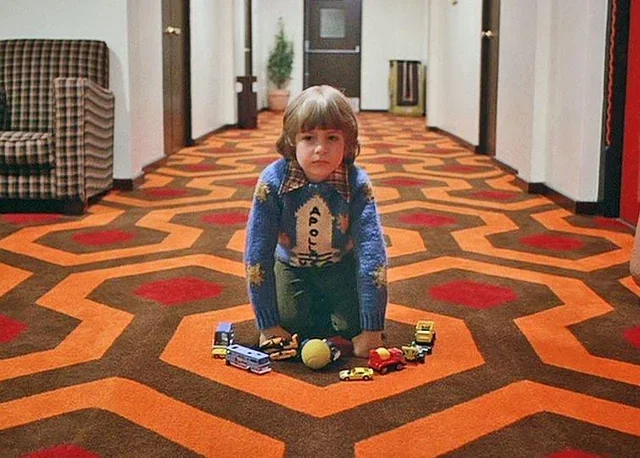
Danny Torrance, a child with psychic abilities who grows up in an environment shaped by addiction, isolation, and supernatural influence. His “shining” is both a gift and a curse, exposing him to horrors others cannot perceive. His backstory is steeped in generational trauma, making him uniquely vulnerable, and uniquely aware, of the forces surrounding him.
Embrace Your Character’s Backstory In Their Journey
Writing compelling and unforgettable stories can be achieved by writers who embrace the backstories of their characters. When you spend time delving into your character’s backstories, and then weaving that into your story, you can not only create more dynamic characters, but you also can make a lasting impression on your readers through the story.
For horror especially, the past is rarely just the past. It lingers, it resurfaces, and sometimes, it refuses to stay buried.
Spend time in your character's past so that you can better frame their future. Because in horror, their future may already be waiting for them there.
MORE HORROR WRITING ARTICLES









Discover how different fear responses can make horror characters feel more realistic, conflicted, and emotionally driven.