
How to Build Horror Worlds That Feel Real and Unsettling
One of the best things about being an author is creating an entire world, whether based on reality or entirely fictional. In horror, that world is not just a backdrop, but a part of the threat. The setting does not simply exist; it influences, traps, or even works against your characters.
Your setting may be high in the Appalachian Mountains or set in the deepest part of the ocean. Perhaps, you decide not to keep your location on Earth at all, or maybe you find that you want to take your characters to the past, future, or some variation of the world that exists now.
Or you may take a familiar place—a home, a town, a quiet road…and make it feel just slightly wrong.
You can do whatever you want!
However, your world should be so rich and immersive that your readers have no trouble slipping into your reality.
They should understand the rules of the world quickly, just in time to realize those rules will not protect the characters.
Before we jump into how to build a perfect world, first you need to understand the mechanics of worldbuilding.
What is Worldbuilding?
World building is more than just building a world; it is the process of creating a fictional environment that shapes every moment of your story.In horror, world building defines what is possible, and what should not be.
This can be a world based on real life, such as a setting that closely resembles your hometown, or something entirely imagined.
Often, the most effective horror settings are grounded in reality, with one detail altered just enough to create unease.
Like many elements of fiction writing, world building occurs in stages.
You need to think critically about the world itself and how its components shape the narrative.
Ask not only what exists in the world, but what is hidden, ignored, or misunderstood by the people living in it.
Learning about worldbuilding will occur in two primary stages:
The visualization of the world
The description of the world.
The first refers to how the world is laid out, while the second is what you present to the reader.
Let’s look at both:
Studying Horror Film Sets
The best way to understand how authors visualize their world is through maps and spatial awareness.
In horror, this step is less about geography and more about control, where can the character go, and more importantly, where can’t they go? The best way to do this is to consider iconic horror movie sets:
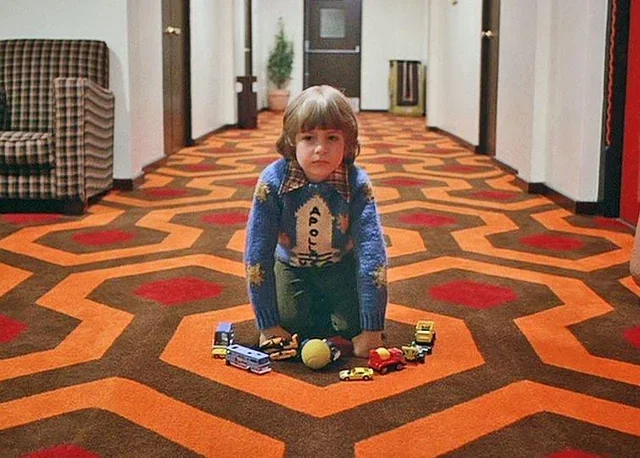
The Shining, the layout of the Overlook Hotel is intentionally disorienting. Hallways loop, rooms feel disconnected, and space itself becomes unreliable.
Alien, the Nostromo spaceship is structured in tight corridors and isolated rooms.
Halloween, the suburban neighborhood is mapped through repetition. Streets, sidewalks, and houses are familiar, but the layout allows Michael Myers to appear and disappear without warning.
The Descent, the cave system is disorienting and unmapped. Tight passages, vertical drops, and collapsing tunnels remove any sense of direction, turning the environment itself into a threat.
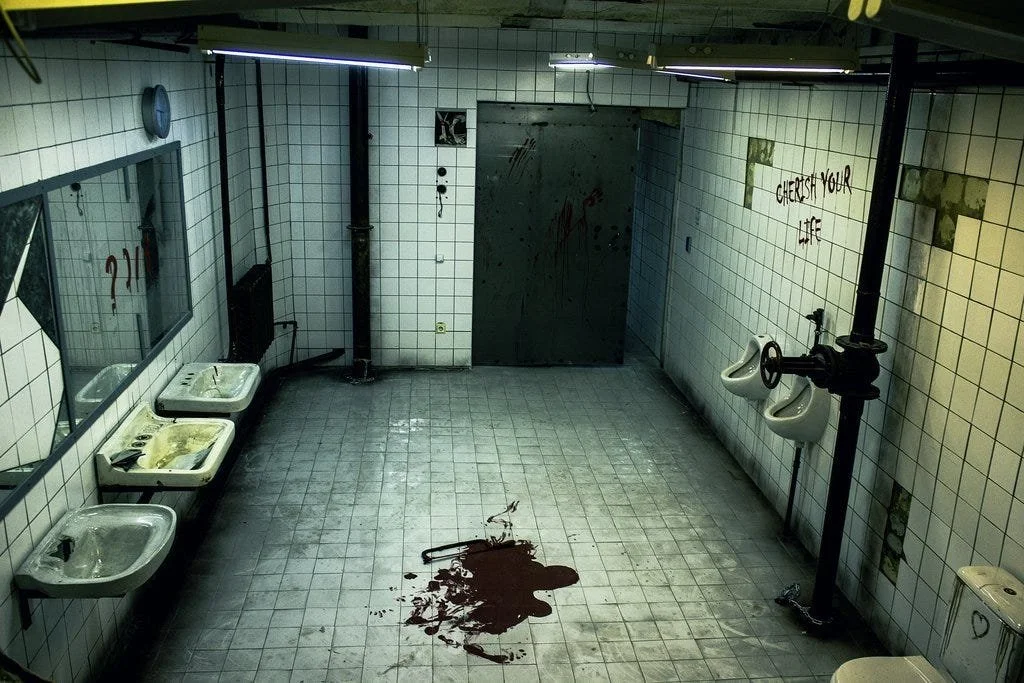
Saw, the primary setting is confined and deliberately controlled. Rooms are designed with a single purpose, forcing characters to move in specific ways. The film is so iconic that is no surprise that it has become inspiration for an escape room, as shown here.
A Quiet Place, the family’s farm is carefully structured around survival. Paths are cleared, objects are placed with intention, and safe zones are defined by silence. The layout of the space directly reflects the rules of the world.
The Blair Witch Project, the forest lacks reliable structure. Maps fail, landmarks repeat, and direction becomes meaningless, reinforcing the idea that the characters are being led rather than navigating freely.
If your story involves movement, you should understand how your character navigates the space.
If your story involves containment, you should understand why they cannot leave. Always focus on how the environment restricts, misleads, or exposes your characters.
Writing Settings That Create Unease
When you write descriptions of your horror world, even if it is familar to the reader, you can be as detailed or as minimal as needed.
Let’s look at a richer description:
“The house sat too still at the end of the road. No lights, no movement; just the faint outline of the porch, sagging slightly as if it had been holding its breath for years.”
This description establishes place, but also tone. The stillness suggests abandonment, while the subtle detail of the porch introduces instability.
Now let’s look at a more direct description:
“The town had been empty for weeks. No one said why. The doors were left open, and the cars were still in the driveways.”
This version is simple, but it raises immediate questions. The lack of explanation creates tension.
The idea of worldbuilding is to give your audience a clear understanding of your setting.
But clarity does not mean completeness. The reader should understand where they are, even if they do not fully understand what is happening.
Without immersive horror world building, your audience will not feel as though they are part of the journey.
With strong atmosphere, they will feel present and aware that something is not right.
Through setting, your readers enter the doorway into your world.
In horror, that doorway rarely closes behind them.
MORE HORROR WRITING ARTICLES







Discover how different fear responses can make horror characters feel more realistic, conflicted, and emotionally driven.